
How to Choose a Whole-Home Remodeling Contractor in Greensboro, NC
What to look for, the questions to ask before you sign, and the credentials that matter when hiring a general contractor for a whole-home renovation.
The most important decision in a whole-home renovation is which general contractor manages it. A whole-home project runs for months and coordinates a dozen trades, so the contractor you choose decides more about the result than any single design or material choice. This guide covers what to look for, the questions to ask before you sign, and the credentials that matter when hiring a whole-home remodeling contractor in Greensboro. The standard to hold every candidate to is simple: one licensed general contractor who owns the design, the trades, the schedule, and the budget, with the completion date written into the contract.
Win-Win Remodeling is a Greensboro design-build general contractor for whole-home renovations, and the criteria below are the same ones we would tell a homeowner to use even if they were interviewing someone else. A good contractor should welcome these questions, not deflect them.
Why the contractor matters more than any single design choice
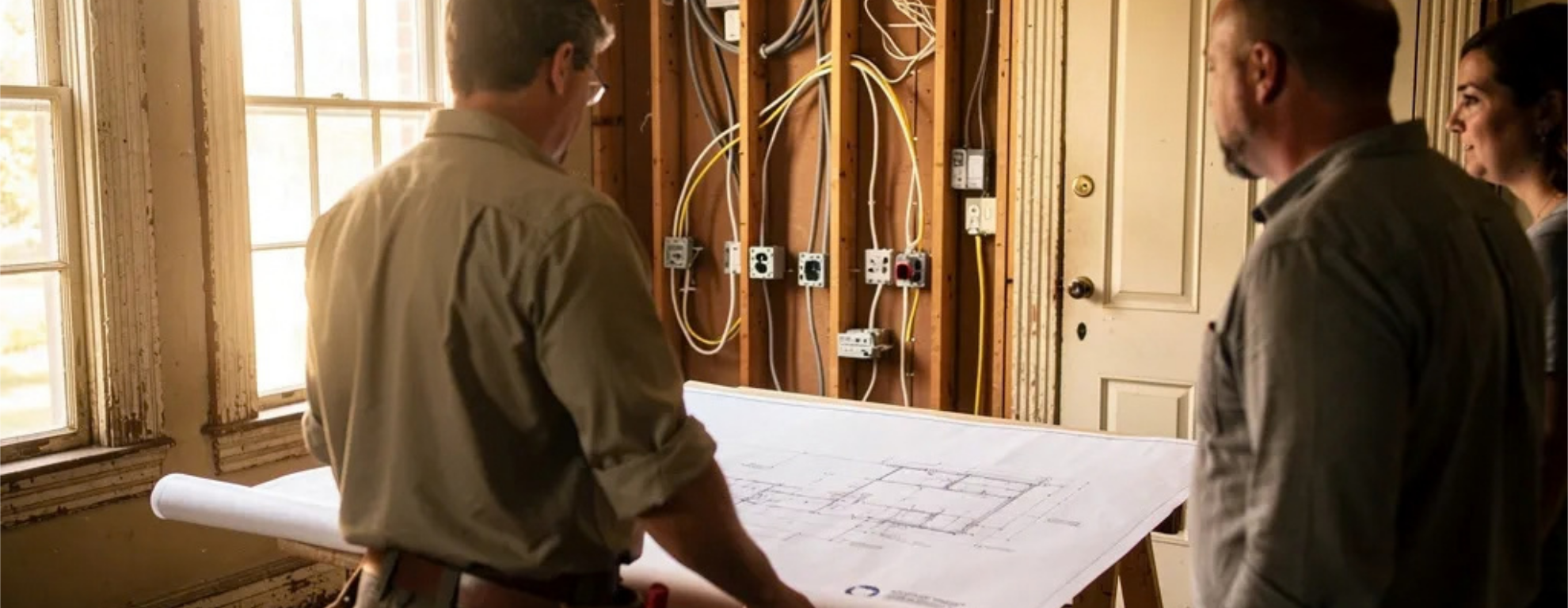
A whole-home renovation succeeds or fails on coordination, and coordination is the contractor’s job. On a whole-home project, plumbers, electricians, framers, tile setters, and municipal inspectors all have to do precise work in the right order. The general contractor runs that sequence a lot like a symphony conductor, deciding when each trade begins and holding the standard for quality across the whole house. When one person owns that, accountability never falls into the gap between subcontractors.
This is also where the difference between a licensed general contractor and a handyman or a single-trade crew shows up. On an older Greensboro home, opening a wall or pulling up a floor often turns up something unexpected: outdated wiring, a joist span that no longer meets code, water damage under the subfloor. A licensed general contractor catches it, explains it, and brings it up to code. A crew working outside its lane is more likely to cover it over and keep moving. What happens at that moment is the whole reason the choice matters.
Design-build or separate designer and builder?
A design-build contractor handles both the design and the construction under one contract, so you do not need finished architectural drawings before you call. In a design-build model, you start with how you live and what you want to change, and the design develops with the same team that will build it. That keeps the design honest to the budget, because the people drawing it also price it. The alternative, hiring an architect or designer separately and then bidding the plans out to builders, can work, but it splits accountability: if the design and the build disagree, the homeowner is caught in the middle.
For a whole-home renovation, single accountability is worth protecting. Win-Win runs as a design-build general contractor, so the design, the budget, the trades, and the schedule stay with one team from the first conversation through handover.
Credentials to require
Require a contractor who is licensed, insured, and bonded before anything else. Those three are the floor, not the ceiling. In North Carolina, whole-home projects above the state threshold must be run by a licensed general contractor, and you are entitled to ask for the license number and a current certificate of insurance. Beyond the basics, a few credentials matter for whole-home work specifically:
- A North Carolina general contractor license. Verifiable through the North Carolina Licensing Board for General Contractors. Ask for the number and confirm it.
- Proof of insurance and bonding. A certificate of general liability insurance, plus bonding, protects you if something goes wrong on site.
- Accredited Builder and/or Accredited Remodeler designations. From the North Carolina Builders Institute, the educational arm of the North Carolina Home Builders Association.
- Local Piedmont Triad experience. A contractor who knows Greensboro’s housing stock, from post-Civil War to present, knows how these homes are built behind the plaster or drywall and what tends to hide there.
- CAPS for forever-home projects. A Certified Aging-in-Place Specialist credential, from the National Association of Home Builders, signals real experience with single-level living and accessible design. Win-Win’s team carries it.
The questions to ask before you sign
The right questions are about accountability, budget, and communication, and a strong contractor answers them without hedging. Most whole-home projects that go sideways were unclear before demolition, not during it. These five questions surface that clarity early.
Is the completion date written into the contract?
A contractor who commits to a completion date in writing is telling you the schedule is real. Ask how that date is protected, and what happens if it slips. Win-Win puts the completion date in every contract and finishes on it.
How is the budget set, and is the number exact before I sign?
Asking what a whole-home remodel costs is a lot like asking what your groceries will cost: it depends on what goes in the cart. The answer you want is a process, not a guess. A good contractor walks through several budgeting rounds so the figure in your contract is exact, and tells you plainly they finish on that budget.
Who owns the design, the materials, and the schedule?
If more than one party owns these, the seams between them are where delays live. You want a single answer: one team finalizes the design, orders the materials, and tracks the timeline. Confusion here is one of the most common causes of a stalled project.
What will communication actually look like day to day?
You are not only buying a finished house, you are living through several months of construction. Ask for a named point of contact and a set rhythm. At Win-Win, the project coordinator, Kevin, is the daily point of contact on site, with a briefing text around 7:30 each morning on who is arriving and a daily log with photos in a client portal you can check from anywhere.
How do you handle surprises in older homes?
Older Greensboro homes hide things, so the answer should be about anticipation, not luck. A disciplined contractor spends hours during pre-construction inspecting everything from the attic to the crawl space to find likely problems before demolition. Surprises still happen, but in experienced hands they are consistently fixable rather than budget-ending.
Warning signs to walk away from
Vagueness is the common thread in every whole-home project that goes wrong. A few specific signals are worth treating as reasons to keep looking:
- No completion date in the contract, or a start date with no end date.
- A budget full of “we’ll figure that out later” instead of a defined scope.
- No single point of contact, or an unclear answer about who runs the job site.
- An estimate that competes only on being the lowest number. On a whole-home project, the lowest bid usually means the most unpriced surprises.
- No license number, or reluctance to share proof of insurance and bonding.
How Win-Win approaches a whole-home renovation in Greenboro
Win-Win is built around single accountability: one licensed, insured, and bonded general contractor owning the design, the trades, the schedule, and the budget. Every contract carries a completion date and a commitment to finish on budget. Before contract, several design and budgeting rounds make the number exact. During construction, a morning briefing and a client portal keep you informed, and a disciplined pre-construction investigation is what keeps surprises from becoming overruns. With more than a decade of whole-home work across the Piedmont Triad and a CAPS credential on the team, the same standards in this guide are the ones Win-Win holds itself to.
Frequently asked questions
What is the difference between a general contractor and a remodeler?
A general contractor is licensed to manage the full scope of a project, including structural, electrical, and plumbing work, and to pull permits and coordinate every trade. “Remodeler” is a general term that can describe anyone from a licensed GC to a single-trade crew. For a whole-home renovation, you want a licensed general contractor who can own the entire project.
Do I need an architect before hiring a whole-home contractor?
Not with a design-build contractor. In a design-build model, the design happens with the contractor rather than before you call one, which keeps the design aligned to the budget from the start. If you already have architectural plans, a general contractor can build from them, but finished drawings are not required to begin.
What licenses should a whole-home remodeling contractor in North Carolina have?
A North Carolina general contractor license for projects above the state threshold, verifiable through the North Carolina Licensing Board for General Contractors, plus current general liability insurance and bonding. Ask for the license number and a certificate of insurance, and confirm both before you sign.
How do I verify a contractor is licensed and insured?
Ask for the license number and check it against the North Carolina Licensing Board for General Contractors, and request a current certificate of insurance naming the contractor. A reputable contractor provides both without hesitation.
Talk with a licensed Greensboro whole-home contractor
The right first step is a conversation, not a contract. Win-Win Remodeling is Greensboro’s licensed, insured, and bonded design-build general contractor for whole-home renovations, managing the entire project with a fixed completion date and a commitment to finish on budget. Bring the questions in this guide to that conversation, and judge the answers for yourself.
Schedule Your Greensboro Whole-Home Consultation